

CareConnect
In-Home Healthcare made easy
BALANCED TEAM: Project manager, UX Designer, Engineering
MY ROLES: Lead UX Designer, User Research
TOOLS: Figma, Miro, Co-Pilot
TIME: 2 Months

The problem
Inefficient infrastructure and legacy management processes are costing medical agencies more than just time. They are eroding profits and patient trust. Without a streamlined approach to accounts receivable and volume management, providers face stagnant growth and a diminishing length of service that threatens long-term viability.
Key challenges
Management of a large volume of healthcare data and federal regulations.
Converting referrals into admissions due to bottlenecks.
Changing Medicaid policies are tightening financial margins, leaving agencies facing payment pressures.
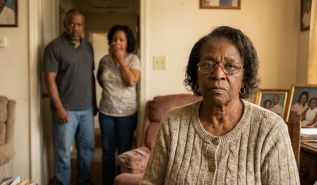
Research and discovery
The discovery phase focused on uncovering the friction points in the unpredictable nature of in-home care. I conducted contextual inquiries and shadowing sessions with five traveling nurses to observe how they manage documentation while navigating patient’s care. By synthesizing these insights into a User Journey, I identified that the primary barrier to quality care wasn't a lack of medical skill, but rather stress caused by fragmented data entry requirements in the field.
The objective
Design a seamless ecosystem that replaces fragmented legacy systems by enabling in-home caregivers to reduce administrative overhead by 25% and focus more time on direct patient care. By streamlining scheduling, documentation, and real-time billing, the app aims to eliminate operational bottlenecks and improve agency profitability.

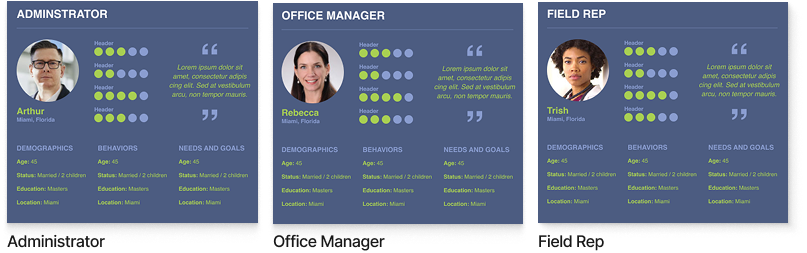
Personas

Contextual inquiries
Three field reps
Agency administrator
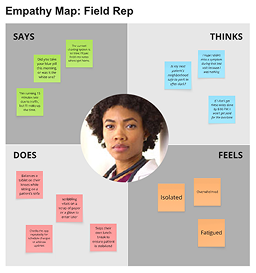
Empathy map
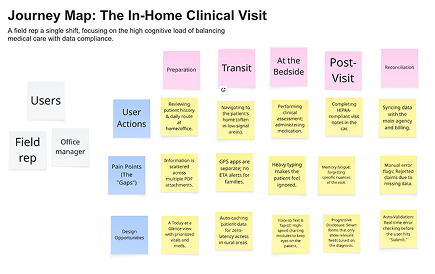
Journey map
My design process
I look at this project not just as screens, but as a tool that manages lives in the most needed times and often during stressful moments. My process is about moving from "What can we build?" to "What do our field representatives actually need?"
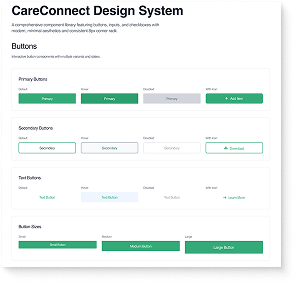
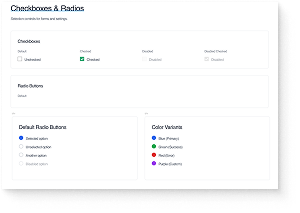
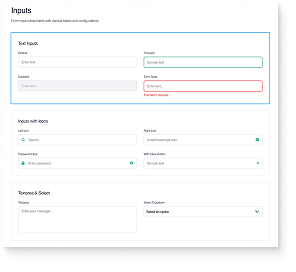
Design system
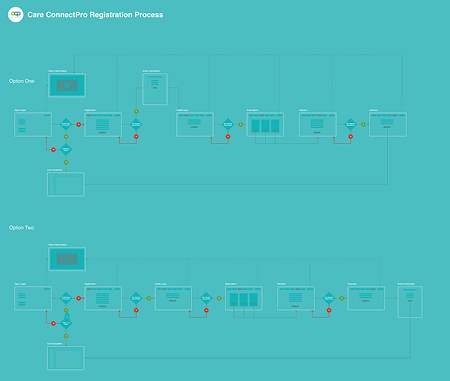
User flow
Created a research plan
7 monitored interviews of flooring specialists
Synthesized interviews
Presented findings to partners/stakeholders
User interviews
Final design
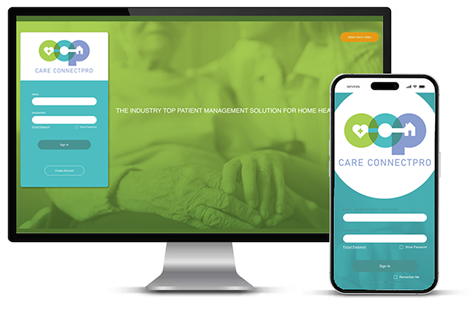
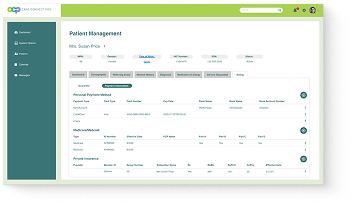
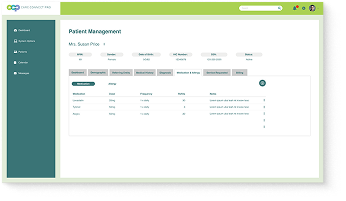
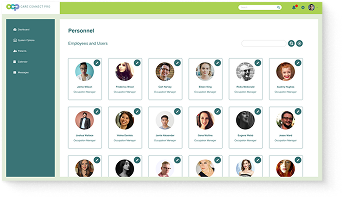
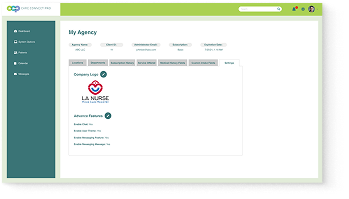
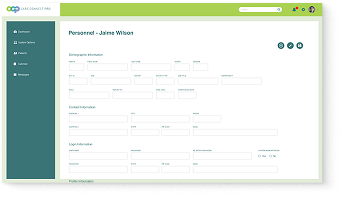
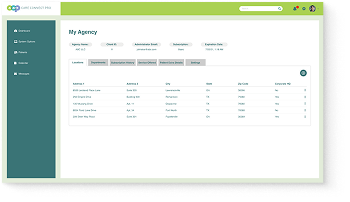
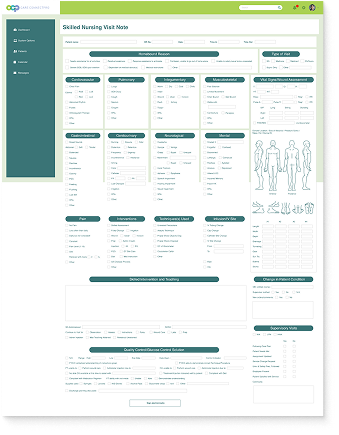
To design CareConnect’s in-home healthcare app, my approach prioritizes empathy. For patients and caregivers, technology should never be an additional hurdle but an invisible support system with a focus on accessibility, emotional reliability, and functional simplicity.
The results
The potential for an in-home healthcare tool is high. Especially with a growing elderly population and hospital networks’ margins for the cost of care. The challenge sometimes comes from a lack of funding, which placed this project on hiatus.
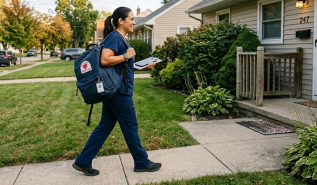
It was difficult juggling patient care with a mountain of paperwork needing to be completed. It took time away from what’s most important, our patient. CareConnect made my work much easier to manage.
Field representative’s feedback
Reporting is more simple and my manager can review my patient’s care in real time.

Key learnings
I joined this project after it had already been built. After a week of UX audit, researching and shadowing, I delivered a user-centered/redesigned product to streamline management of in-home healthcare for patients. The project went into hiatus due to funding.
What worked well
Reduction in manual paperwork
Reduction in patients’ intake
Increased oversight of patients’ medication intake
Opportunities
Use generative AI to draft clinical notes in real-time.
Integrate with wearable data (heart rate, gait, sleep) to flag subtle changes.
A family dashboard that provides real-time, HIPAA-compliant updates.